

Compare five long-blade freediving fins for everyday open-water use, including three Apnea Maldives models, with fit, material, and reef advice.
The short answer: the best freediving fin is the one that fits securely, matches your leg strength and technique, and suits the water you actually dive. For a buyer who wants a documented upgrade path, the Cressi Gara Modular Impulse is the most clearly specified long-fin platform in this group. For divers who prefer a deliberately soft flex, the Mares Razor is the clearest fit. For Maldives-based divers who want an 80 cm, medium-labelled composite long fin, Apnea Maldives Kanba and Apnea Maldives Dhidha deserve equal attention; their published core specifications are very close, so choose on exact fit, live stock, and the design you prefer. Apnea Fins Minimal – Rajje is the value-led Apnea option, but buyers should confirm its current availability and blade material before ordering.
Important context: These five products are long-blade freediving and spearfishing fins, not compact general-purpose swim fins. They can work well for open-water training and surface swimming, but long blades are less convenient for ladders, shore entries, tight boats, crowded lagoons, and close reef work. The guide is based on current manufacturer information and published product pages, not independent laboratory testing or undocumented personal testing.
Quick picks
| If your priority is… | Start with | Why it is a sensible starting point |
|---|---|---|
| A long-fin platform that can evolve with you | Cressi Gara Modular Impulse | Its documented modular system accepts Cressi polypropylene, fiberglass, and carbon long blades without modification. |
| A soft, reactive feel for medium-depth and surface spearfishing | Mares Razor | Mares says Razor is 30% softer than Razor Pro and positions it for medium-depth and surface fishing. |
| A Maldives-based medium long-fin setup | Apnea Maldives Kanba or Dhidha | Both publish an 80 × 20 cm blade, 20° angle, medium stiffness, 0.8 kg listed weight, rubber rails, and six foot-pocket size ranges. |
| A value-led Apnea Maldives option | Apnea Fins Minimal – Rajje | It has the same published 80 × 20 cm / 20° / medium framework at a lower listed price, while being marketed across snorkeling, freediving, spearfishing, and scuba diving. Confirm stock and material description first. |
| Casual snorkelling, frequent shore entries, or regular scuba logistics | A shorter recreational fin, not one of these by default | Long blades are designed for a different task: propulsion with a long, controlled kick. A shorter fin is usually easier around ladders, rocks, boats, and people. |
What does “everyday use” mean for a freediving fin?
For this guide, everyday use means regular open-water training, relaxed finning between dives, surface swims, and moderate recreational freediving. It does not mean that a long fin is automatically the best choice for every beach holiday, scuba boat, or reef entry.
A long blade moves more water per kick than a short snorkelling fin when it is used with a slow, controlled technique. That can feel smooth and efficient in open water. The trade-off is practical: an 80 cm blade needs space. It is easier to catch on a boat ladder, brush the reef if technique is poor, or become awkward during a rocky shore entry. Good equipment choice is therefore about context and control, not simply blade length.
For ocean safety, choose a fin you can use without toe pain, foot cramping, heel lift, or uncontrolled kicking. In current, do not rely on fin specifications alone. Follow the local briefing, keep a realistic exit plan, and use long fins only within your training and conditions.
The five fins at a glance
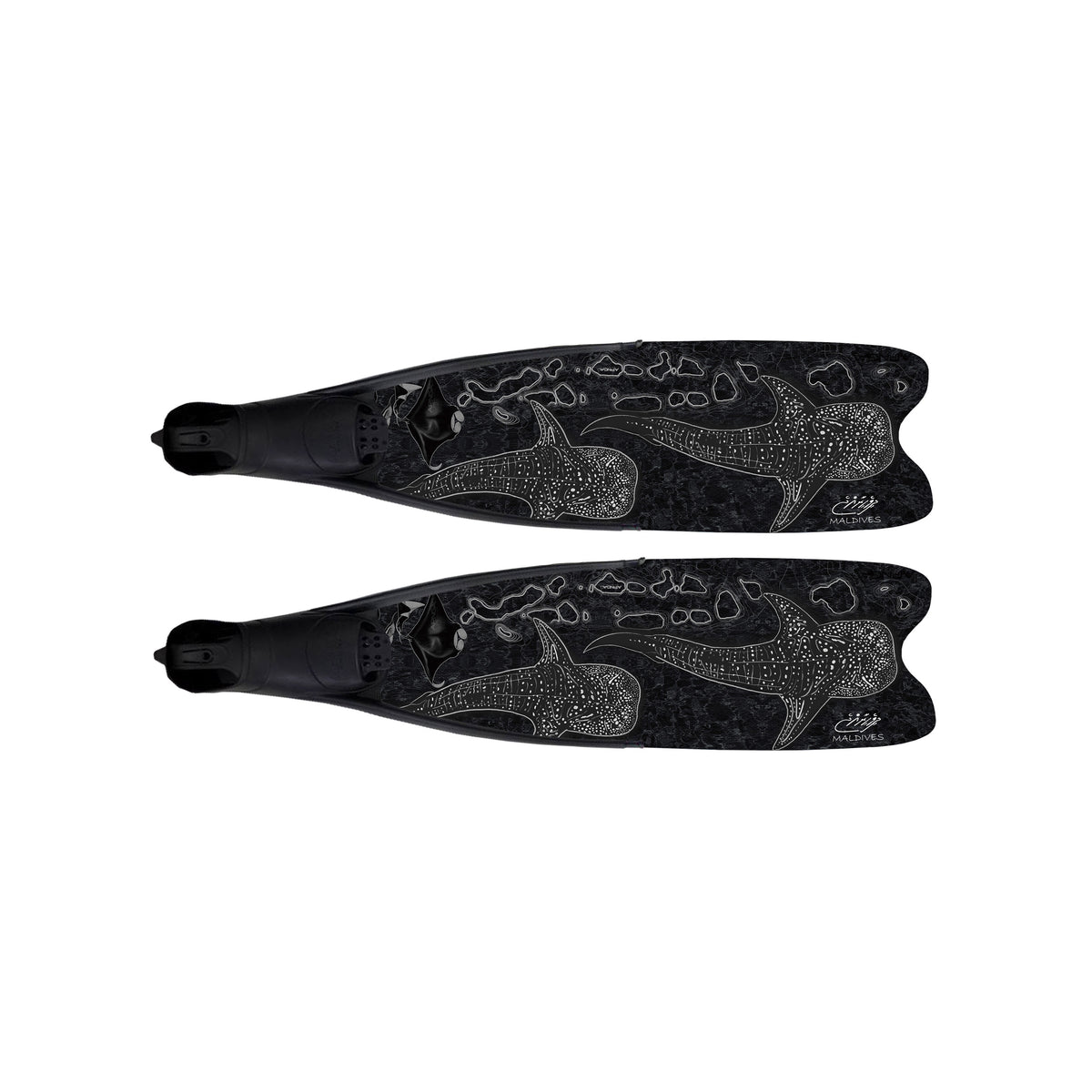
1. Apnea Fins Minimal – Rajje — best value-led Apnea Maldives option, with checks required
View Apnea Fins Minimal – Rajje
Apnea Maldives lists Minimal – Rajje as an approximately 80 cm × 20 cm, medium-stiffness fin with a 20° blade angle, rubber rails, rubber foot pockets, and a published blade-pair weight of around 0.8 kg. The product page markets the set for snorkeling, spearfishing, freediving, and scuba diving, and lists a sale reference price of MVR 2,451 including tax at the time of research.
This makes Rajje the broadest everyday-use proposition on the brand’s own activity list. The long blade and angled foot-pocket geometry point toward open-water propulsion rather than short, rapid kicks. Its published price also puts it below Kanba and Dhidha. The limitation is transparency rather than concept: the set page states epoxy resin and fiberglass, while Apnea’s separate Rajje blade-only page says epoxy resin and plastic. The product variants also showed sold-out/unavailable states during the check. Ask the seller to confirm the exact blade construction, availability, and return conditions before purchase.
Best for: the value-minded Apnea Maldives shopper who wants one long-fin system for open-water freediving and intentionally accepts the practical compromises of a long blade for snorkeling or scuba surface swimming.
Watch-outs: do not assume that “snorkeling and scuba” in a product activity list means it will be more convenient than a short recreational fin. Confirm the blade material and live inventory before adding it to a trip kit.
2. Apnea Fins – Kanba — a clean, conventional Maldives long-fin setup

Kanba is Apnea Maldives’ epoxy-resin and fiberglass composite long-fin configuration. The brand publishes an approximately 80 cm × 20 cm blade, a 20° angle, medium stiffness, a listed 0.8 kg weight, rubber rails, and Apnea Rubber Foot Pockets across six size ranges. Its published price was MVR 4,790 including tax when this guide was checked.
In plain English, the 20° angle places the blade closer to the line of your lower leg during a kick. The rubber rails are designed to help guide water along the blade. These are normal features in a long freediving fin; the important question is whether the pocket holds your foot firmly enough to transfer your effort without squeezing your toes or lifting at the heel.
Kanba is a strong shortlist choice for a diver who wants a locally relevant, medium-labelled composite long fin for lagoon training, blue-water practice, and relaxed open-water sessions. It should not be presented as objectively faster than Dhidha, because the available published evidence does not show a meaningful performance difference. It is also not automatically the most practical option for a shore dive with a lot of walking or a crowded coral entry.
Best for: a beginner-to-intermediate freediver who has tried a correct long-fin fit and wants a conventional composite format instead of an ultra-stiff specialist blade.
Watch-outs: Apnea does not publish a quantified flex curve, internal pocket measurements, or a sock-fitting method for this model. The listed weight does not say whether it is per blade or per pair. Check stock, fit, and the seller’s exchange policy before committing.
3. Apnea Fins – Dhidha — Kanba’s like-for-like alternative
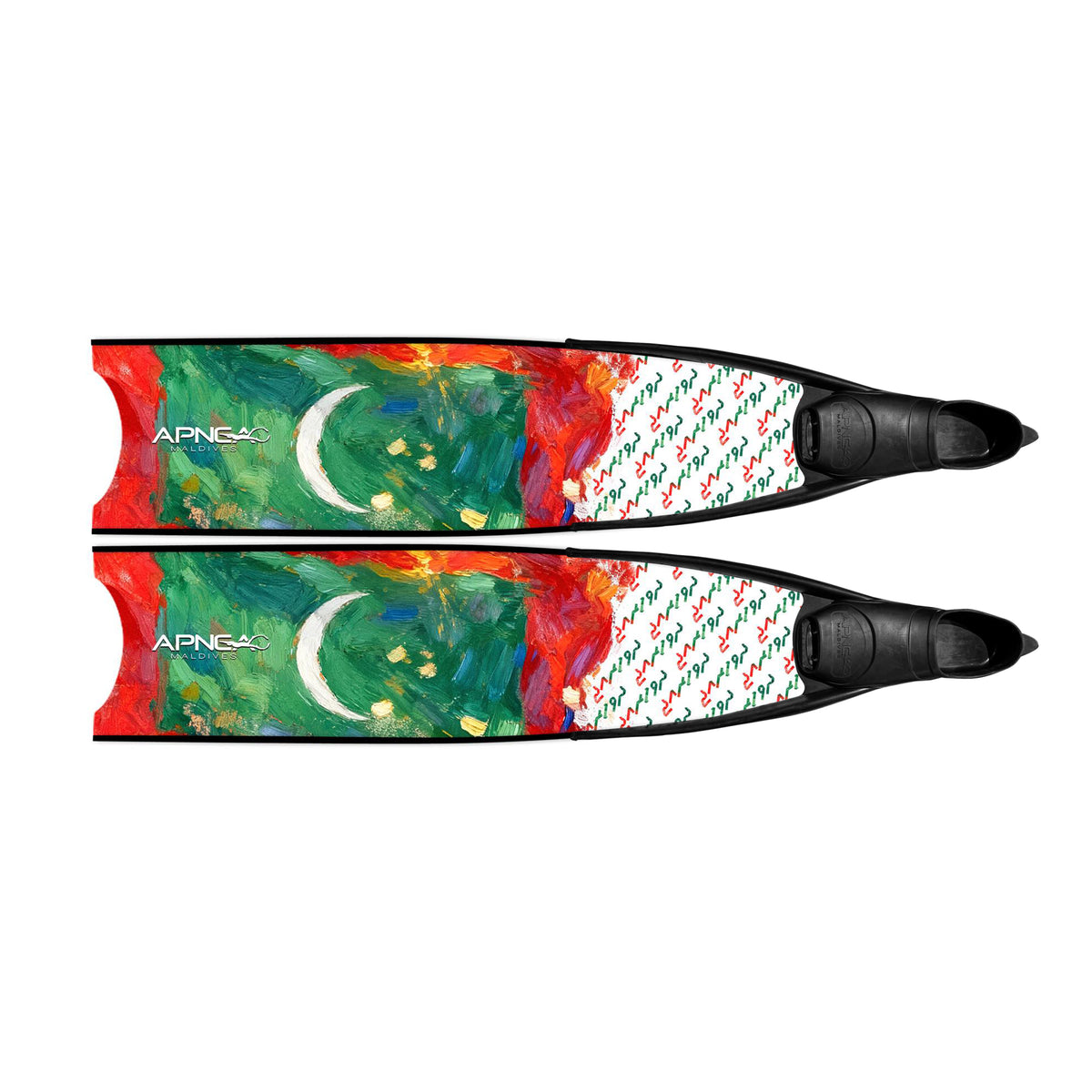
Dhidha shares the published essentials of Kanba: an approximately 80 cm × 20 cm epoxy-resin and fiberglass blade, a 20° angle, medium stiffness, a listed 0.8 kg weight, rubber rails, and six Apnea Rubber Foot Pocket size ranges. Apnea Maldives lists it at MVR 4,790 including tax.
That similarity is useful. It lets a buyer focus on the things that matter most in real ownership: the exact pocket size, the actual sock they will wear, the current availability of the chosen color/size, and the visual design they want to keep using. A fin that fits correctly and gets used often is more valuable than a theoretically better blade that stays in a bag.
Dhidha should be treated as a freediving-oriented long-fin system, not as a one-size-fits-all scuba or snorkeling fin. In a warm Maldives lagoon it can be a satisfying open-water tool when there is room to use a calm, long kick. Around fragile coral, use compact movements, keep distance, and never let a long blade turn into a reef-contact risk.
Best for: a freediver who wants the documented Apnea Maldives composite format and prefers Dhidha’s finish or available configuration.
Watch-outs: the published page gave mixed availability signals at the time of research. Confirm exact stock. As with Kanba, no independent thrust, durability, or current-performance data were published in the sources reviewed.
4. Mares Razor — the clear soft-flex alternative
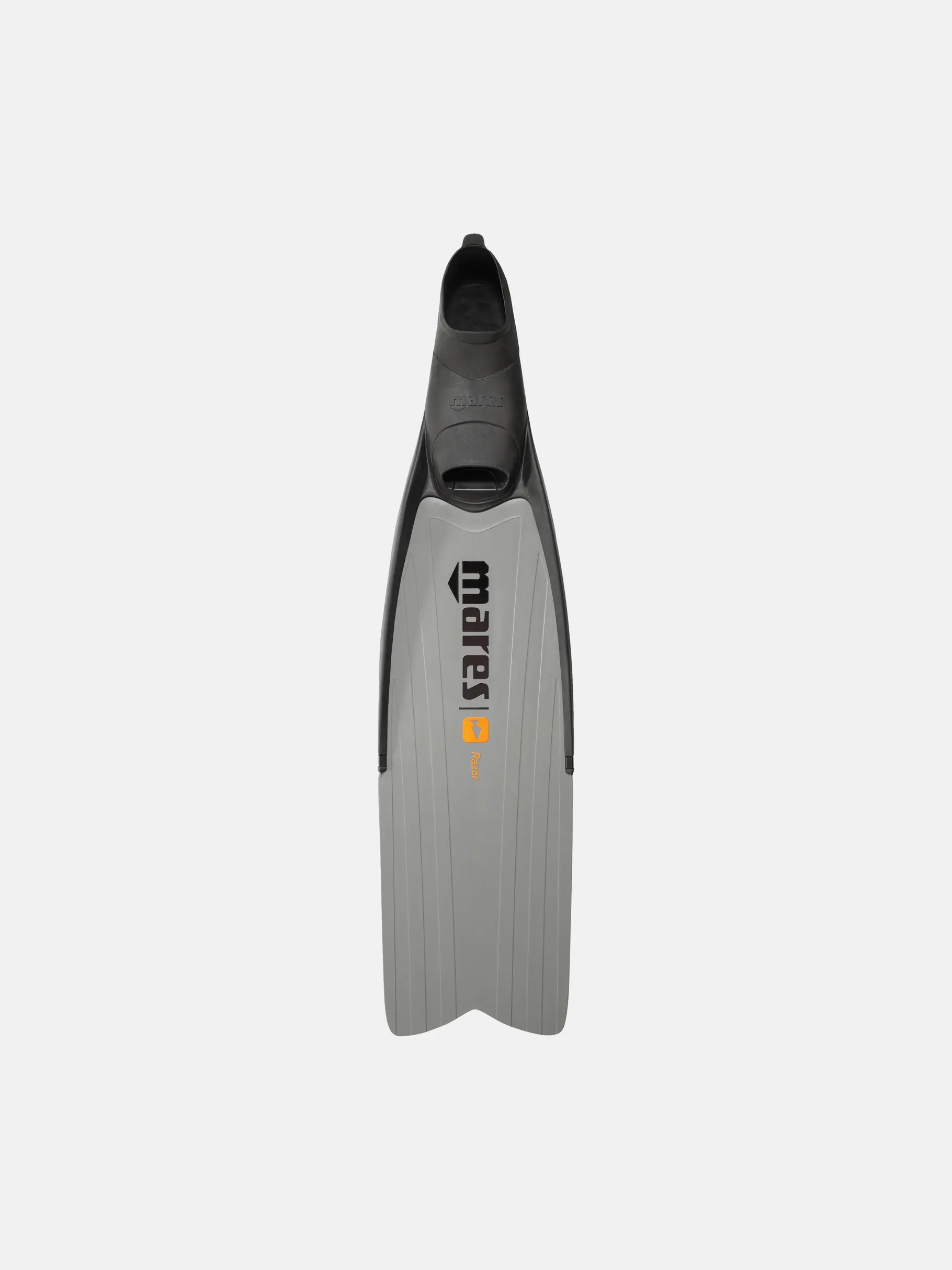
Mares positions Razor as a soft but reactive freediving fin for medium-depth and surface fishing. The maker says it is 30% softer than Razor Pro and lists a high-quality elastomer blade, five sizes, and a United States price of US$157.95 at the time of research.
The practical takeaway is simple: softness is a preference, not a universal upgrade. A softer blade may appeal to divers who prefer a lower-resistance, more relaxed feel, especially when surface swimming or working on controlled technique. A powerful diver, someone carrying a heavier spearfishing load, or a diver regularly working against current may prefer more stiffness—but that decision is personal and should ideally follow a test session, not a marketing label.
Mares gives unusually specific fit guidance: Razor’s foot pocket is intended for a 3 mm neoprene sock; for barefoot use, Mares advises selecting one size smaller than the actual foot size. That is important information for warm-water divers who often switch between barefoot and thin-sock use.
Best for: the diver or surface spearfisher deliberately seeking Mares’ soft, reactive character and willing to follow the brand’s sock-based sizing guidance.
Watch-outs: Razor is not documented here as a compact snorkeling fin or a scuba-specific work fin. Do not equate soft with effortless or assume the same result for every body size, depth, load, or current.
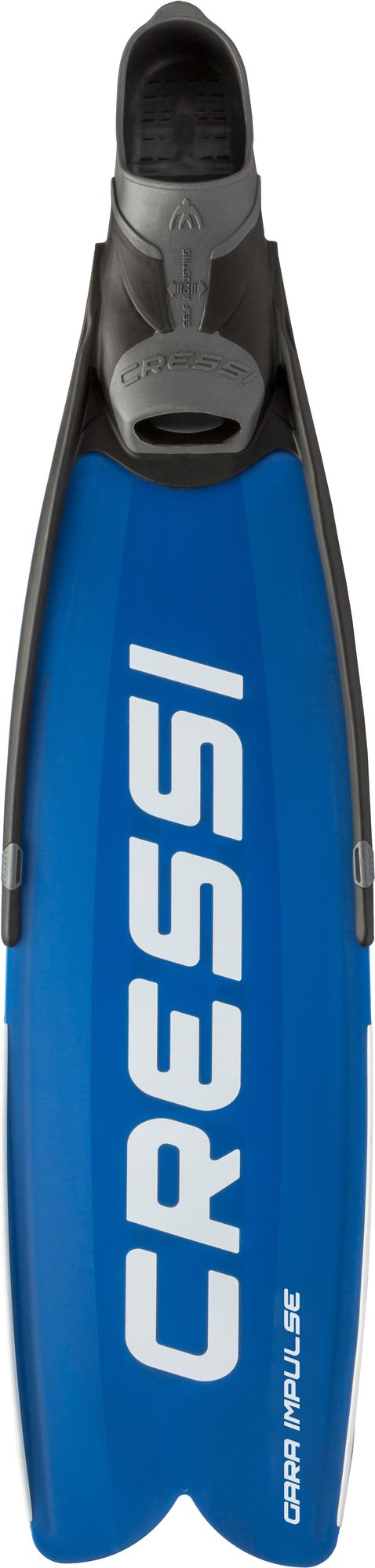
5. Cressi Gara Modular Impulse — best documented path for freediving progression
View Cressi Gara Modular Impulse
Cressi positions Gara Modular Impulse for deep freediving and spearfishing. The supplied blade is light, shock-resistant polypropylene with a 29° angle. The system uses a wider, multi-compound full-foot pocket with included trimmable insoles. Its defining feature is the platform: Cressi says its polypropylene, fiberglass, and carbon long blades can be interchanged without modification. The official United States page listed it at US$189.95 at the time of research.
That modularity is why this is the strongest documented all-rounder recommendation for a freediver who expects to progress. It is not a claim that the supplied plastic blade is faster than fiberglass or carbon. Instead, it means the buyer can begin with one known platform and later change blades without replacing the entire system, provided fit and compatibility remain correct.
The pocket deserves attention. Cressi describes it as wider than other Gara freediving models and recommends neoprene socks for proper fit. Its European store also advises going one size smaller without socks. A broad pocket can be comfortable, but only if it does not allow heel lift or loss of control. Fit it with the exact sock thickness you will use in the sea.
Best for: a beginner or intermediate freediver who wants a long-fin system with a clear upgrade route and can obtain a precise pocket fit.
Watch-outs: this is still a long, full-foot freediving fin. It is less convenient than a short open-heel scuba or snorkel fin for walking, sharing equipment, changing boot thickness, or frequent shore entries.
Comparison: materials, geometry, and real-life ownership
| Fin | Published blade / system | What that means in practice | Everyday-use reality |
|---|---|---|---|
| Apnea Minimal – Rajje | Epoxy/fiberglass on its set page; a separate blade page says epoxy/plastic; 80 × 20 cm, 20°, medium label, rails. | A lower-priced, long-blade route with an important material clarification to make before buying. | Broadest official activity list, but still a long fin. Best in open water, less simple around ladders and rocky entries. |
| Apnea Kanba | Epoxy/fiberglass, 80 × 20 cm, 20°, medium label, rails. | A conventional composite long-fin configuration with a clear published geometry. | Suitable to consider for regular training and open-water use once pocket fit is confirmed. |
| Apnea Dhidha | Epoxy/fiberglass, 80 × 20 cm, 20°, medium label, rails. | Published core specification closely matches Kanba. | Make this a fit, stock, and preferred-design choice—not a performance claim over Kanba. |
| Mares Razor | High-quality elastomer; 30% softer than Razor Pro. | The group’s clearest manufacturer-published soft-flex positioning. | Purposeful for freediving/surface spearfishing; use the 3 mm-sock or barefoot sizing guidance. |
| Cressi Gara Modular Impulse | Polypropylene blade, 29°, multi-compound pocket, interchangeable Cressi long-blade system. | A material-resilient starting blade with a documented upgrade path. | Strong progression option if its wider pocket fits securely with the intended sock. |
Fiberglass, plastic, and elastomer: what should a new freediver choose?
Fiberglass composite blades are often chosen by divers who want a responsive long-fin feel without moving immediately to a premium carbon blade. Polypropylene or plastic blades can be practical for routine training because they are generally more tolerant of everyday knocks than delicate performance composites. Elastomer blades, such as the Mares Razor’s published construction, can deliver a characteristically soft, flexible response. None of these materials is automatically “best.” Blade angle, stiffness, foot-pocket fit, technique, and the diver’s leg strength matter just as much.
The critical rule is to avoid buying by material name alone. A poorly fitted premium fin is a worse choice than a well-fitted, appropriate mid-range fin. If you are new to freediving, invest first in coached technique, controlled equalization practice, a buddy system, and a secure fin fit.
Which fin is best in Maldives conditions?
Warm-water lagoon training
Warm water makes a thin neoprene sock or barefoot setup tempting, but that can change fit dramatically. Mares provides a clear barefoot adjustment guideline; Cressi specifically notes its wider pocket and sock dependence. Apnea publishes nominal size ranges, but not internal pocket measurements or a sock protocol in the reviewed listings.
For calm lagoon sessions, Kanba, Dhidha, Rajje, Razor, and Gara Modular Impulse are all long-fin concepts that make the most sense when you have clear water, adequate depth, and room to kick without touching the bottom or coral. Select based on fit and intended stiffness feel. Do not let the warm temperature persuade you to accept a loose pocket.
Reef and coral environments
Long fins need more awareness near coral. Use slow, compact movements around a reef. Maintain distance from coral heads, avoid kicking behind you when hovering, and choose a shorter fin if the day will involve tight channels, frequent standing, or shallow coral access. No fin is an excuse to compromise coral protection.
Drift dives and current
For current, the first decision is operational, not equipment-based: listen to the guide, know the exit plan, and carry the required surface-safety equipment. A long fin may offer useful propulsion, but no published product page in this comparison provides verified current performance. Avoid claims that one of these models is proven for strong current.
Boat diving and ladders
Put long fins on at the water’s edge or from a controlled seated position when possible. On a ladder, manage the blades deliberately and follow the crew’s procedure. If a trip includes frequent ladder exits and surface logistics, a compact scuba fin can be the simpler choice.
Shore entries
Do not walk across rock, sand, or coral in a long-blade fin unless the entry makes that necessary and safe. Carry them to deeper water when practical. A shorter, more robust snorkel or scuba fin is normally more convenient for repeated shore entries.
How should a full-foot freediving fin fit?
A freediving fin should feel secure and even, not painfully tight. Your toes should not jam into the front of the pocket. Your heel should not rise noticeably when you point and flex your ankle. You should not get pressure points, numbness, or cramping during a short test swim.
Use the exact sock thickness you plan to dive with. A fin that fits barefoot may become too tight with a 2–3 mm sock; a pocket that feels fine with a sock may be loose barefoot. Mares specifically recommends a 3 mm sock for Razor and advises one size smaller for barefoot use. Cressi says Gara Modular Impulse has a wide pocket, recommends neoprene socks for fit, and advises a smaller size without socks on its European store.
Before travel, do a controlled pool or protected-water session. Test relaxed flutter kicks, slow descents, turns, and surface swimming. Stop using the fin if you develop cramping, persistent numbness, or pain. In freediving, comfort improves safety because it helps you stay relaxed and conserve attention.
Pros and cons of choosing a long freediving fin for everyday use
Benefits
A long fin can make open-water surface swims and controlled freediving kicks feel smooth and efficient. The blade gives you more surface area to work with, which rewards a calm, deliberate kick. These fins also create a consistent platform for freediving technique, especially when training regularly rather than switching between unrelated fin shapes.
Limitations
Long blades are awkward in narrow spaces and can be impractical for travel days involving ladders, shore walks, crowded boats, or very shallow reef. They require better spatial awareness and are easier to damage if dragged or knocked. For a family snorkel day or everyday scuba logistics, a compact fin may be the genuinely more useful second pair.
Buying guide: five questions to answer before ordering
- Where will I use them most? Choose a long blade for open-water freediving practice, not because it looks more advanced. If shore entries and boat ladders dominate, consider a compact fin as well.
- What will I wear inside the pocket? Decide between barefoot, thin sock, or 3 mm sock before selecting a size.
- How strong and efficient is my kick today? Start with a manageable flex. A fin that feels controllable for an hour is more valuable than one that only feels powerful for five minutes.
- Can I test or exchange the pocket? Foot shape varies. A return policy is part of good equipment selection.
- What is actually in stock? Prices, variants, and stock changed across several pages during research. Confirm the exact size, color, and current price directly with the seller.
Frequently asked questions
Are these fins good for beginners?
They can be, if the beginner is learning under appropriate supervision and the foot pocket fits perfectly. Long fins do not replace coaching. A medium-labelled blade such as Apnea Kanba or Dhidha, a softer Mares Razor, or the supplied polypropylene Gara Modular Impulse blade may be easier to manage than a very stiff specialist blade, but personal fit and technique matter more than a label.
Are long freediving fins good for everyday snorkeling?
They are good for open-water snorkeling when you specifically want long-fin propulsion and have room to use them. They are not automatically the most convenient everyday snorkeling choice. Short fins are usually easier for beaches, ladders, shallow water, and close reef observation.
Can I use these fins for scuba diving?
Apnea Maldives explicitly markets Minimal – Rajje for scuba diving as well as snorkeling, freediving, and spearfishing. The other sources reviewed primarily categorize their models for freediving and/or spearfishing. A long full-foot fin can propel a scuba diver at the surface, but this guide does not treat any of these models as a proven primary scuba work fin. Consider exposure protection, entry method, fin-kick style, and your dive operator’s requirements.
Which is better: Apnea Kanba or Apnea Dhidha?
Based on the published information, neither has a demonstrated performance advantage. Both list essentially the same core dimensions, 20° angle, medium stiffness, 0.8 kg listed weight, epoxy/fiberglass construction, rails, and MVR 4,790 price. Choose the model that is in stock in your correct size, feels best on your foot, and has the finish you prefer.
Is Apnea Minimal – Rajje a good value?
Its listed price was lower than Kanba and Dhidha, and Apnea markets it across more activities. However, its documentation needs a pre-purchase check: its set page calls the blade epoxy/fiberglass while a separate blade listing says epoxy/plastic, and availability appeared unavailable at the time of review. It can be a good value only after those details are confirmed.
How durable are long-blade freediving fins?
Durability depends on the material, rails, pocket assembly, storage, travel protection, and how the fins are used. Avoid dragging blades, leaving them in direct sun or a hot car, bending them sharply, and walking on hard ground in them. Rinse with fresh water, dry away from direct heat, and store them flat or in a way that does not distort the blade. The reviewed pages do not provide independent durability test results for a fair ranking.
Is a softer fin always easier to use?
No. A softer blade changes the feel and loading of the kick. Mares says Razor is 30% softer than Razor Pro, but individual comfort and efficiency still depend on leg strength, ankle mobility, technique, depth, current, and the load you are moving.
Expert-style verdict: an honest buying recommendation
| Model | Editorial rating* | Best use case | Value and long-term view |
|---|---|---|---|
| Apnea Minimal – Rajje | 7.5/10, pending confirmation | Value-led, open-water long-fin use across the activities Apnea lists | Attractive listed price; confirm material, stock, and fit first. |
| Apnea Kanba | 8.0/10 | Maldives-focused recreational freediving and open-water practice | A well-defined composite long-fin specification; buy on fit and availability rather than assumed superiority. |
| Apnea Dhidha | 8.0/10 | The same practical role as Kanba, with Dhidha’s available design | Treat it as Kanba’s equal on the published essentials; verify live stock. |
| Mares Razor | 8.2/10 | Soft-flex freediving and medium-depth / surface-spearfishing orientation | A clear choice for a diver who wants Mares’ published softer feel and follows the sock sizing. |
| Cressi Gara Modular Impulse | 8.5/10 | Freediving progression with a future blade-swap path | The most clearly documented system versatility in this group; pocket fit is non-negotiable. |
*Ratings are editorial usefulness scores based on documented fit guidance, specification clarity, system versatility, intended use, and value context—not independent performance testing or a claim of universal superiority.
The fairest conclusion is not “one fin wins for everyone.” Cressi Gara Modular Impulse is the most compelling choice for a freediver who wants a documented modular platform. Mares Razor is the clearest pick for a softer flex and its stated medium-depth / surface-fishing purpose. Within the Apnea Maldives range, Kanba and Dhidha are the most straightforward long-fin choices because their published configurations are clear and comparable. They should be selected by exact pocket fit, stock, and preferred design. Rajje is the lower-priced option with the widest stated activity range, but its composition and availability should be clarified before purchase.
That is the buying principle that matters most: a relaxed, well-fitted fin used often is better than an expensive long blade that is uncomfortable, awkward in your conditions, or left at home.
Related reading and internal-link opportunities
Use the following links where matching content exists on the site. These suggestions improve the reader journey without forcing unrelated links.
- Shop Apnea Maldives freediving fins — category page for readers comparing current models.
- Apnea Fins – Kanba and Apnea Fins – Dhidha — direct product links for readers ready to check sizing and availability.
- Freediving fin size guide — link to a future or existing guide explaining barefoot versus neoprene-sock fit.
- How to care for freediving fins — link to a maintenance guide covering rinsing, drying, travel bags, blade protection, and storage.
- Freediving in the Maldives: reef, lagoon, and boat safety — link to a destination guide focused on conditions, buddy practice, and coral protection.
- How to choose a freediving mask and snorkel — link to complementary equipment for new divers building a complete setup.